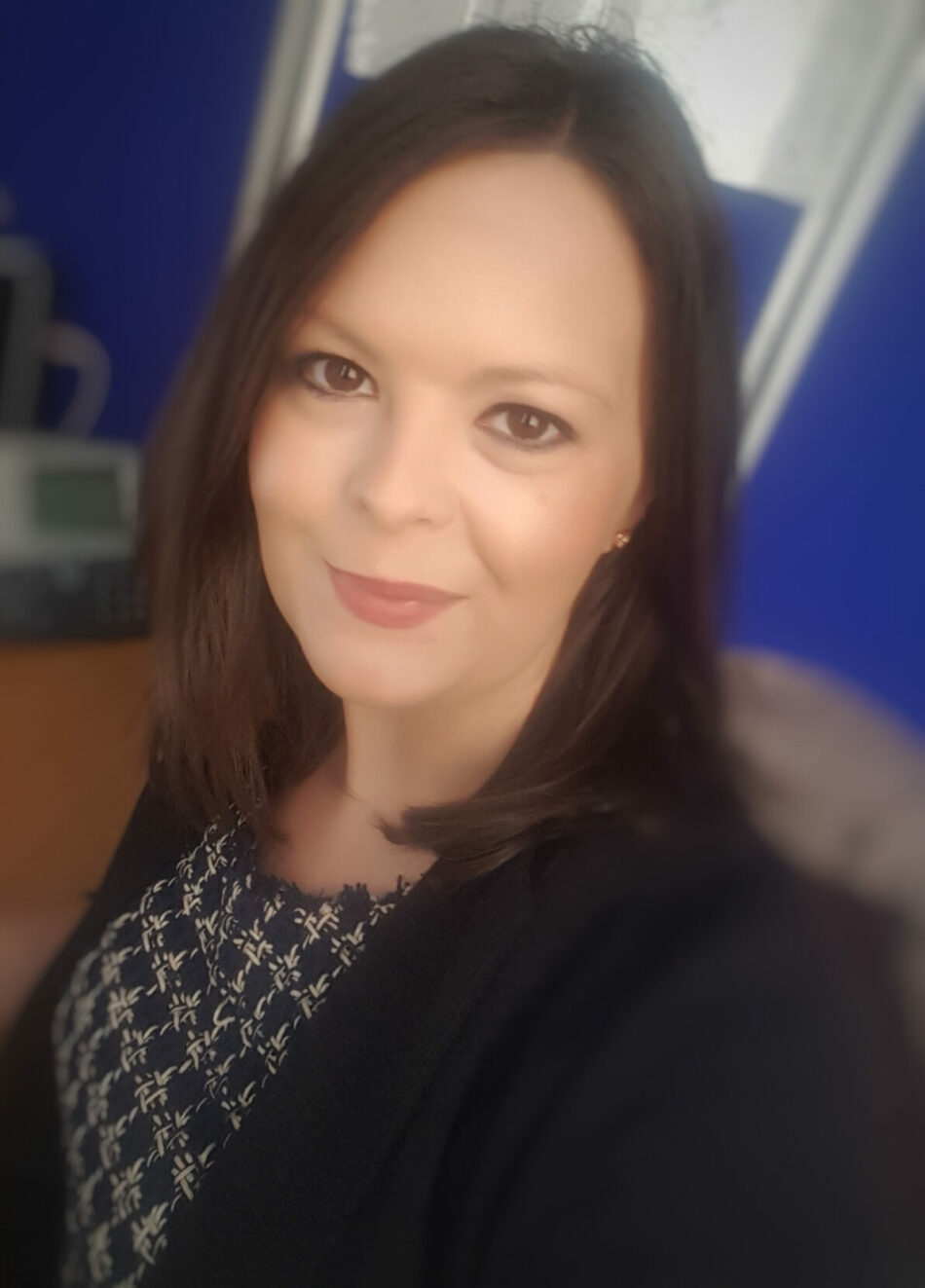
What’s your name and professional role?
Joleen Kirsty Eden, Consultant Radiographer specialising in Breast Imaging
Where did you train and when did you qualify?
I studied for a BSc (Hons) at the University of Salford between 2005 and 2008. I continued my postgraduate journey at Salford, studying Mammography in 2009, and later completed an MSc in Advanced Medical Imaging in 2019.
How long have you been in your profession and have you worked for different employers and/or been based in different locations?
I began my radiography training in 2005 at Manchester Royal Infirmary and went on to train in mammography at Wrightington, Wigan and Leigh between 2008 and 2009. I remained at Wrightington, Wigan and Leigh for seven years before moving to the East Lancashire Breast Unit in Burnley in 2015 to further develop my advanced practice career. In 2024, I moved to Bolton NHS Foundation Trust (FT). Alongside these roles, I continue to provide bank support to Tameside and Glossop NHS Breast Unit.
Where do you currently work?
Bolton NHS FT as the first and only Consultant Radiographer in the Trust.
Describe a typical day in your role, does this vary much from day to day?
My role is incredibly varied. Whilst I continue to work predominantly clinically, my day starts with a stretch and then coffee (always).
I start work at 8am and will either undertake reporting or attend MDT. I often undertake full-day clinics which consist of NHSBSP assessment clinics, new patient one-stop clinics and dedicated booked ultrasound lists.
Before finishing my day at 6pm I will verify reports, letters and attend to any clinical matters which may have arisen during the day.
My job plan involves protected administrative time which enables me to allocate one day a week to other duties including research and education activities, as well as acting as a clinical expert for various groups and national strategies.
Working with the University of Salford as an honorary lecturer enables me to provide teaching and support to postgraduate breast radiographers.
Other roles include council member for the Breast Imaging Special Interest Group (SoR) and Manchester Medical Society, assessor for the College of Radiographers, and reviewer for peer-reviewed journals including Clinical Radiology, Radiography and Ultrasound.
What processes does your role involve?
Working autonomously, I perform reporting, ultrasound and interventional procedures, supporting both asymptomatic NHS breast screening programme patients and symptomatic patients.
I also support trainees and clinicians, working with a range of professional roles including enhanced and advanced practitioners, radiologists, breast fellows, trainees in all roles, associate mammographers and medical students.
How many patient interactions do you have on a typical day?
It varies but on average I am involved in a double assessment clinic of around 12 patients, and a double one-stop clinic which can have up to 24 patients.
In addition, reporting of NHSBSP patients can be anything from a small batch of 30 up to 300 patients in a session.
Other reporting duties include follow-up patients, high/moderate risk family history cases, and monitoring of disease.
Do you attend Multidisciplinary Team (MDT)/other team meetings?
Yes, we have two diagnostic MDTs per week which we undertake on rotation. I will prepare symptomatic and screening cases for discussion, presenting them with documented outcomes.
In addition, we have senior leadership team meetings and advanced practice meetings monthly.
Do you do out of hours work/on call and if so what does this involve?
Within breast I am no longer required to work on call.
However, I will often support mine and other breast units in the Greater Manchester region to provide additional clinical activity where required.
My role, being very diverse, allows me to collaborate with a range of professional groups and institutions including the Greater Manchester Cancer Alliance and the University of Salford. At times this work occurs in my own time, including evenings and weekends, therefore striking a positive work-life balance can occasionally be challenging, but nevertheless rewarding.
What are the challenges of your role and what do you love about your job?
The greatest challenge is time (not enough of it).
Learning to become extremely efficient but also the power of saying no, when it is not in my nature to do so.
We hold a unique space for patients in their continuity of care. Navigating complex pathways, information overload and unknown territory, we become familiar faces in unfamiliar circumstances.
Prioritising all the other aspects of my role is challenging when clinical activity is increasing. The understanding of what my role is and how it can benefit patients, the service, the profession and wider healthcare remains a constant source of debate. Whilst there is greater education about the benefits that come from the role, the challenge always comes back to the crisis in workforce and the ever-increasing workload.
That said, opportunities that come with my role are constantly increasing.
Working with the University is greatly rewarding and enables me to stay on top of new evidence. Sharing that with the profession and being a small part in the journey of others is a part that I truly love.
Leading as a clinical expert for a workforce scoping project commissioned by NHS England enabled me to deeply understand the barriers and challenges faced by both diagnostic and therapeutic radiographers across the northwest.
These collaborations have enabled me to present at international conferences such as Symposium Mammographicum and the European Society of Breast Imaging (EUSOBI).
Some of my greatest achievements have come through publication: contributions to several core textbooks including Digital Mammography: A Holistic Approach, Person-Centred Care in Radiology, and the upcoming 2nd edition of Breast Ultrasound.
Research activities I have undertaken led to a pioneering change in practice whereby ELHT NHS provided the first fully radiographer-led results clinics for all breast screening patients – a quality improvement initiative that improved patient and professional outcomes.
Being able to make a change that has a real positive impact is what matters to me. Working as a Consultant Radiographer is not easy. The days are long, the demands relentless, and our energy reserves at times questionably low. Yet the work is meaningful, and it matters.
We get to be part of every patient’s journey in some way, providing a holistic approach. Yes, we push buttons (necessary to obtain that perfect diagnostic image), but in doing so, we push boundaries.
For me… a person-centred image begins before a single pixel is captured.