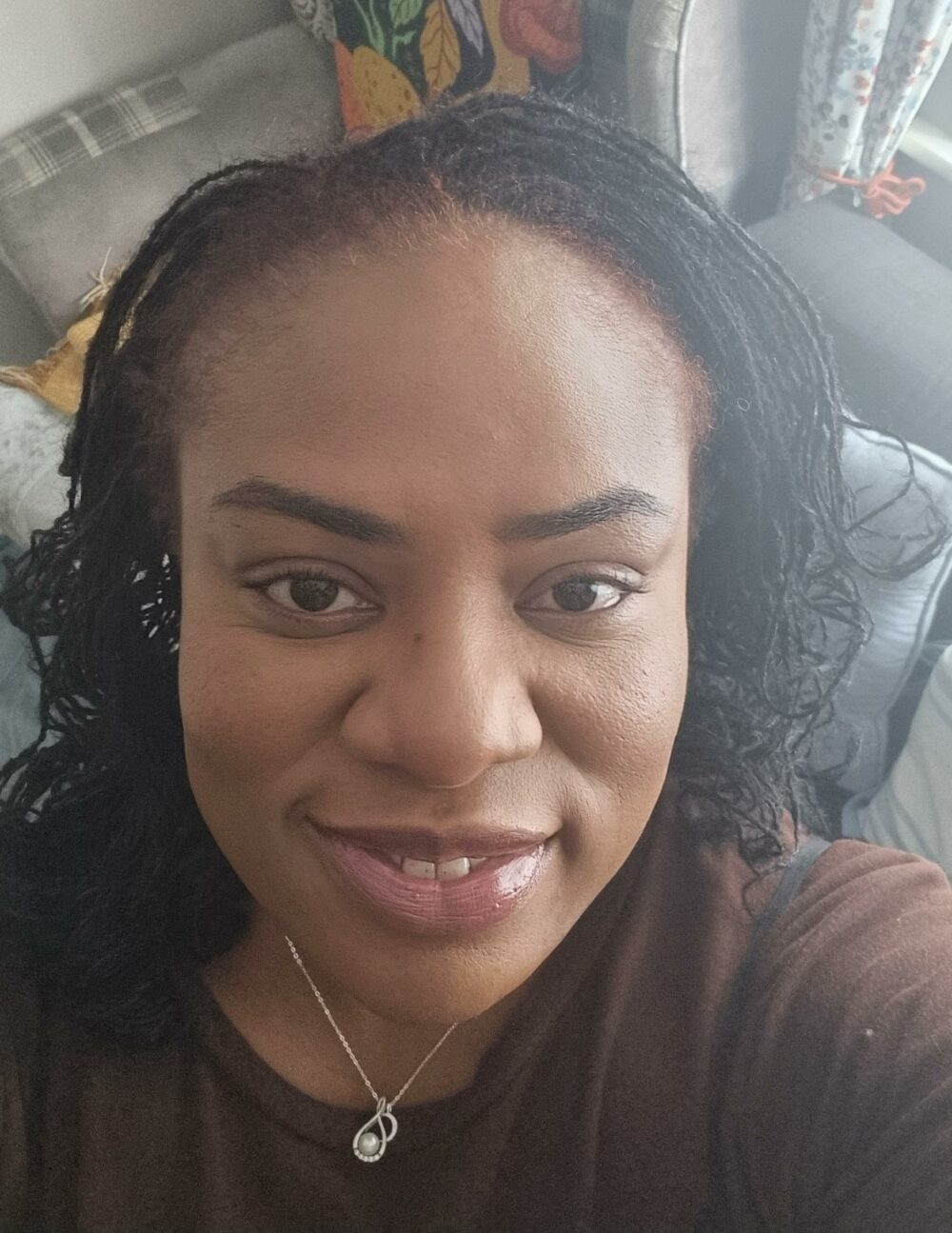
Hello, I am Dr Yvonne Osuagwu, a credentialled Breast Clinician at Manchester University Hospitals NHS Foundation Trust. I started my training to become a Breast Clinician in October 2021 and completed the Credential in Breast Disease Management at the Luton and Dunstable Hospital in Bedfordshire.
My background is in radiology, having trained as a Radiologist in the prestigious University College Hospital Ibadan Nigeria. As a Radiologist, my special interests were breast and musculoskeletal (MSK) radiology.
I moved to the UK in 2019 and in 2020 was working as a specialty doctor with a special interest in MSK Radiology at the Queen Alexandra Hospital in Portsmouth on the Certificate of Eligibility for Specialist Registration (CESR) pathway. It was during my time here that I met a Breast Radiologist who noted my keen interest in breast imaging. She told me about the Credential in Breast Disease Management. I applied and was selected to start my training in Luton and Dunstable Hospital.
During my credential training, I was able to work independently and have my own clinics. My weekly routine consisted of two whole days of screening assessment clinics, two symptomatic one-stop clinics, a session for interpreting and reporting radiology, and a whole day of family history clinics. There were also two multidisciplinary team meetings with the breast care team per week.
For as long as I can remember my daily routine usually starts with a personal 20-minute Mandarin language lesson. Before settling on Mandarin, I did some French, some Korean and some Japanese lessons. This gets my brain alert and frankly is a great start to the day. I have since advanced in my understanding of Mandarin and currently sometimes converse with some of my patients.
The first year of my training was a roller coaster of new learning, new places, new people, and new goals but it really expanded my vision and changed my perspective in so many ways. As the training progressed, I particularly valued the support from my peers on the programme. I found my third and final year on the Credential especially satisfying as I was able to work independently. This helped ease staffing pressures in the department and enabled our patients to be seen more quickly. I also enjoyed undertaking audits, including a pivotal audit following up the women screened by the family unit. This audit recorded the cancers developed during the period of their family history screening and validated the importance of the service.
I think that of all my training, I appreciated mammographic screen reading the most. I think it is so important for countries to have a breast screening programme, and its value cannot be overemphasised. Being part of that is very special. During my training, the team at Luton was extremely warm and supportive. I am very fortunate to have been able to train and work with such a great team.
I completed the Credential two years ago and currently work as a credentialled Breast Clinician at the Nightingale Centre, Wythenshawe Hospital, Manchester Universities NHS Foundation Trust. My current clinical commitments include working in one-stop symptomatic breast clinics and family history services. I am also the Vice President of the Association of Breast Clinicians and a member of the oversight board for the breast clinician credential program. I recently concluded a post graduate certificate in medical and health education which I utilise as an educator for the National Breast Imaging Academy (NBIA) initiatives. As part of this I run regular study days for breast clinician learners and other professionals in breast services.
The Credential has enabled me to pursue my interest in breast radiology. I love the contact with patients and the need for effective communication with them. Our screening patients are relieved their cancers have been detected and treated early. It is very uplifting to know that you’re doing something that people appreciate and you can see the tangible benefits of the breast screening programme in early detection.
I believe that this Credential is pivotal in tackling the workforce crisis in breast imaging and would highly recommend the Credential for those interested in a fulfilling career in imaging and patient facing healthcare.